The Presbyterian Understanding of Baptism
WRITTEN BY REV. TANNER FOX
How are we to understand baptism?
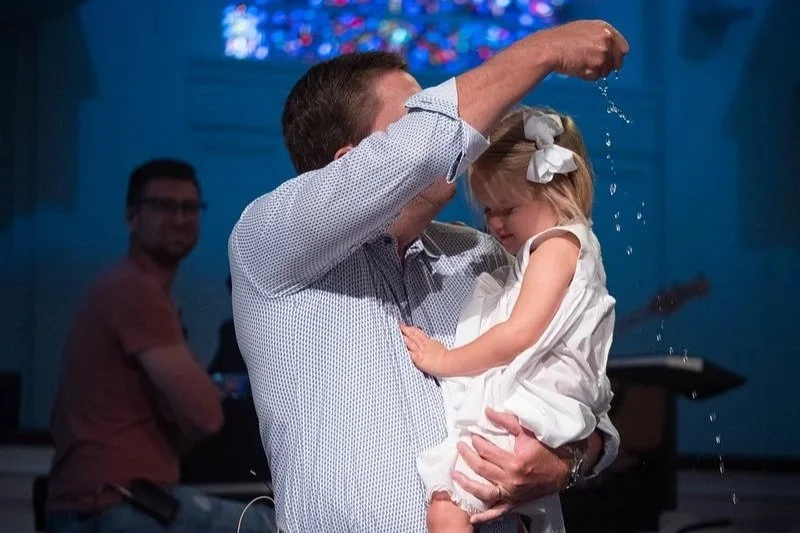
Let’s begin by asking some questions regarding our basic understanding of baptism. We have seen baptisms happen in the life of the church in various ways, whether to children or adults, sprinkling their heads or dunking their entire bodies. Different pastors use different language for the moment the sacrament is bestowed. You may have heard something like, “Buried with Christ in his death, and raised to walk in newness of life.” Or something like, “You are a beloved child of the covenant, and I joyfully baptize you in the name of the Father, Son, and Holy Spirit.” Most often, baptisms are performed during a worship service in the witness of other members of the church. Sometimes, you might hear stories of students coming back from youth trips where the youth leader baptized kids who made a profession of faith in a freezing cold river. Other times, you might hear of people going to the Holy Land and being baptized in the Jordan River.
Different traditions understand this sacrament in different ways. This short paper will explore the way Presbyterians, and more particularly, our community at First Presbyterian Church of Orlando understands baptism.
What is Baptism? Answers from our Church History
Westminster Shorter Catechism - Q. 94 - What is Baptism?
Baptism is a Sacrament wherein the washing with water, in the name of the Father, and of the Son, and of the Holy Ghost, both signify and seal our ingrafting into Christ, and partaking of the benefits of the covenant of Grace, and our engagement to be the Lord’s.
1 Cor. 11:23-26, Matt. 28:19, Acts 2:38-42, Acts 22:16, Rom. 6:3-4, Gal. 3:26-27
Heidelberg Catechism - Q. 74 - Should infants, too, be baptized?
Infants as well as adults belong to God's covenant and congregation. Through Christ's blood the redemption from sin and the Holy Spirit, who works faith, are promised to them no less than to adults. Therefore, by baptism, as sign of the covenant, they must be incorporated into the Christian church and distinguished from the children of unbelievers. This was done in the old covenant by circumcision, in place of which baptism was instituted in the new covenant.
Gen 17:7; Mt 19:14. Ps 22:10; Is 44:1-3; Acts 2:38, 39; 16:31. Acts 10:47; 1 Cor 7:14. Gen 17:9-14. Col 2:11-13.
Both of these questions and answers come from historic documents known as the Westminster Shorter Catechism (1647) and the Heidelberg Catechism (1563). Both these works of theology loom large in our Reformed Tradition as foundational and trustworthy interpretations of the God’s word, systematized for our understanding and teaching.
The answers are formulated from a careful reading of the pertinent texts from both Old and New Testament that offer us answers to both the questions of “what it is,” and “to whom it should be administered.”
The first question is not nearly as debated in the church. Most churches believe in the basics concerning baptism in terms of utilizing water and viewing the act as a cleansing. The second question, however, begins to reveal differences of conviction and belief. The best way of understanding a Presbyterian and Reformed View on Baptism is to key in on the connectivity between the Sacrament and the Covenants as means of connection between God and his people.
Baptism and our understanding of Covenant Theology:
In both Catechisms, we see the language of Covenant. Presbyterians are known as Covenant theologians, which simply means, we see the bible as one big story of God connecting with his people through special relationships called covenants. The Westminster Shorter Catechism says a covenant is “a bond in blood, sovereignly administered.” The definition has a few parts that are worth exploring. First, “a bond,” which means two parties are coming together in relationship. Second, “in blood,” reminds us that each covenant has, as a symbol, some form of bloodshed. This gives us a picture of the severity of consequence if the covenant is broken, but also points us to an understanding of sacrifice for the sake of relationship that will be most perfectly symbolized in the death of Jesus. Finally, “sovereignly administered” reminds us that although the covenant is between two parties, us and the Lord, he will carry the responsibility for sustaining our relationship, even to the point of the death of his only son.
Covenants are God’s chosen way of connecting with his people. Through these covenants, he has offered himself to his people and offered symbols that mark the people as belonging to him.
In order to understand the sacraments in our own day and age, we must first understand the nature of covenants, the signs that God gave to symbolize them, and how they are brought forward in time!
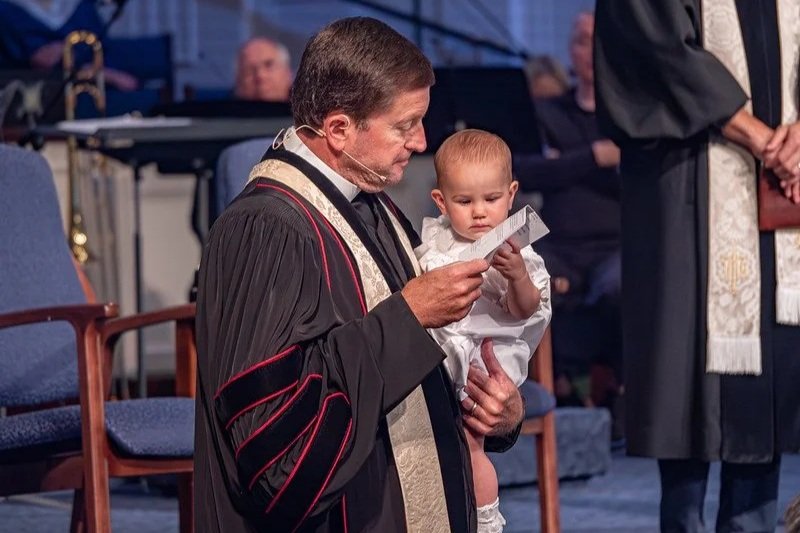
We celebrate the sacraments of Baptism and the Lord’s Supper on a regular basis in worship, and we do so to remind ourselves of the Covenant of God’s grace in Jesus Christ. Baptism is seen as our way into the Covenant Family, and The Lord’s Supper is the family meal. These are the signs Jesus chose to help us understand the new covenant he instituted through his life, death, resurrection, and ascension, but he is borrowing from the signs that had been used throughout Israel’s history.
The Lord’s Supper, which is not the topic of our conversation, is a renewed symbol of the passover meal from the story of Exodus. They were to feast on the slaughtered lamb, whose blood was on the doorpost of their homes, in order to have the angel of death pass over their home. The symbol is the death of a lamb for the life of their firstborn sons. In Christ, the perfect lamb of God, we have the gift of substitutionary atonement, Christ’s life for ours. When we eat of the bread and drink of the cup, we do so in remembrance of Jesus and in gratitude for his sacrifice (Luke 22:14-26).
From Circumcision to Baptism:
Baptism is also borrowed from another tradition, less so in form and more deeply in meaning. In the Old Testament, children born into the Jewish community were marked, through circumcision, as belonging to Israel. This was a symbol, instituted by God, in the covenant with Abraham. In essence, the act was to symbolize the cutting off of skin — representing sin — in order to belong to the people of God. The cost of entry into the community was a form of sacrifice, through a blood right, in order to belong. Further, the sign reminded them that if they refused the mark of their belonging to the community and to God, more graphically, if they refused to have their foreskin cut off or refused it for their children, then they would be cut off from the people of God.
Other passages in the OT, like those from Jeremiah, reveal that circumcision was the symbol of a more significant reality. The prophet implores Israel to “circumcise their hearts.” (See Jeremiah and Deuteronomy) New Testament writers also pick up this language and tether our understanding of removal of the “flesh” or sin to the person and work of Jesus.
Colossians 2:11 In him also you were circumcised with a circumcision made without hands, by putting off the body of the flesh, by the circumcision of Christ, 12 having been buried with him in baptism, in which you were also raised with him through faith in the powerful working of God, who raised him from the dead. 13 And you, who were dead in your trespasses and the uncircumcision of your flesh, God made alive together with him, having forgiven us all our trespasses, 14 by canceling the record of debt that stood against us with its legal demands. This he set aside, nailing it to the cross. 15 He disarmed the rulers and authorities and put them to open shame, by triumphing over them in him.
As we can see from this passage, the New Testament writers recognized a clear connection between the two symbols of belonging to the people of God, by way of a new sign, and through a new source, the life, death, and resurrection of Jesus.
The old sign was a sign in blood, reminding the people of the cost and severity of the covenant. The new sign no longer needs blood as a symbol because the true work of bloodshed to pay the penalty of sin, the experience of being cut off from the people of God had already been experienced by Jesus. He has done the work and therefore can offer us a new way of signifying our belonging to the people of God. Baptism is akin to a second birth, through water and into a family.
John 3:3-6 Jesus replied, “Very truly I tell you, no one can see the kingdom of God unless they are born again.” 4 “How can someone be born when they are old?” Nicodemus asked. “Surely they cannot enter a second time into their mother’s womb to be born!” 5 Jesus answered, “Very truly I tell you, no one can enter the kingdom of God unless they are born of water and the Spirit. 6 Flesh gives birth to flesh, but the Spirit gives birth to spirit. 7 You should not be surprised at my saying, ‘You must be born again.’
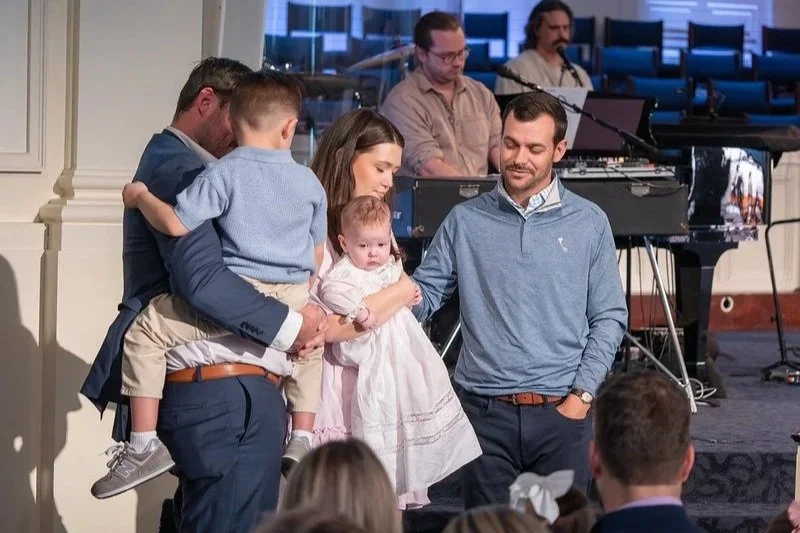
As covenant theologians, we believe this sign of belonging, to the people of God, as a renewed symbol of circumcision is to be offered to believers and their children.
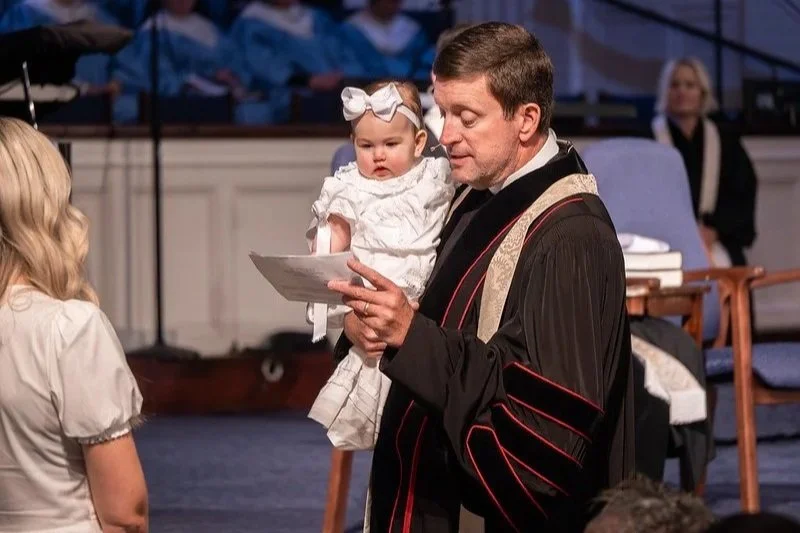
For more about the Sacrament of Infant Baptism and ways of being baptized at First Pres: